CEA Fundamentals: Valuing Outcomes

Learning Objectives and Outline

00

Learning Objectives

  • Understand the concepts of summary measures of health, specifically, quality-adjusted life years (QALYs)

  • Describe the general differences between direct and indirect methods for estimating health state utilities

  • Curate model parameters for quantifying “benefits” (the denominator in the C/E ratio)

Outline

01

Clinical Outcomes

02

Summary Measurements

03

Alternatives to ICERs

ICER review

Numerator (costs)

Valued in monetary terms

Examples:

  • $USD
  • ₦NGN
  • KES
  • R

\frac{\colorbox{#CfAE70}{$C_1 - C_0 \quad (\Delta C)$}}{E_1 - E_0 \quad (\Delta E)}

Denominator (benefits)

Valued in terms of clinical outcomes

Examples:

  • # of HIV cases prevented
  • # of children seizure free
  • # of quality-adjusted life years gained

\frac{C_1 - C_0 \quad (\Delta C)}{\colorbox{#CfAE70}{$E_1 - E_0 \quad (\Delta E)$}}

Benefits

  • What’s important for the question at hand
  • Most analyses report several different outcomes
  • QALYs/DALYs enable comparability across disease areas

Valuing Health Outcomes

Clinical Outcomes

01

What are they?

Clinical outcomes allow us to measure particular events in a decision tree or health economic model.

For Example:

# of HIV cases prevented

# of children seizure free

# of healthy pregnancies

# of hospital visits

# of disease deaths

# of cancer progressions

When are they used?

  • Policy holders need the information
  • The outcome holds high importance
  • Short-term models

How do you choose one?

“Is implementing screening for colon cancer cost-effective?”

What concerns might arise for each of these?

  • Number of cases of colon cancer Screening will increase the number of cases caught.
  • Number of cases of STAGE 1 colon cancer Could heavily favor Screening
  • Number of cancer deaths Deaths aren’t the healthcare burden
  • Number of hospitalizations from colon cancer Minimal Data
  • Number of screenings completed Focuses on implementation
  • etc.

All these are still great outcomes, they just highlight important considerations when choosing the one for your research question

A Well Defined Clinical Outcome

Specific

  • Each outcome should describe one clear event or condition.

  • If you combine too many things into one outcome, it can be hard to understand why strategies are different.

  • When possible, use separate outcomes for different events (for example: survival, complications, hospitalizations).

Prevent biasing a strategy

  • Make sure the outcome truly shows what is happening clinically, not just what is cheap or expensive.
  • Some bad events may look “good” in a model because they cost less. (For example, death has low cost, but it is clearly a bad outcome.)

Answers your research question

  • Chosen outcomes should generate information that is meaningful for the research objective and decision context.
  • Focus model structure and computational effort on outcomes that influence decision‑making ot drive differences in outcomes.

Data is available

  • As with much of economic modeling, clinical outcomes rely on accurate data

Summary Measurements

02

Why summary measures of health?

QALYs and DALYs both provide a summary measure of health

Allow comparison of health attainment/disease burden

  • Across diseases
  • Across populations
  • Over time
  • Etc.

Intro to QALYs

Origin story: welfare economics

  • Utility = holistic measure of satisfaction or well-being

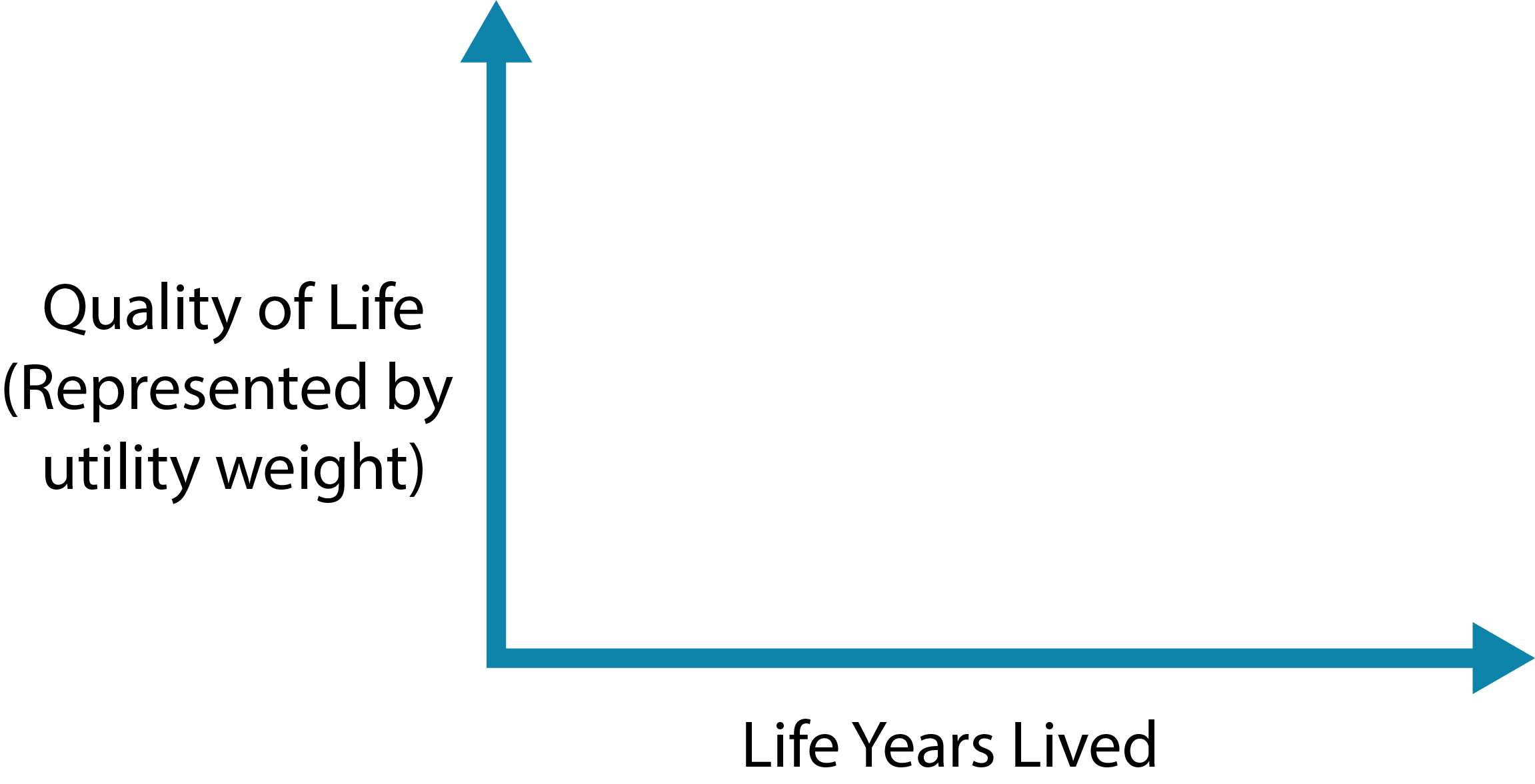
With QALYs, two dimensions of interest:

Length of life
measured in life-years

Quality of life
measured by utility weight, usually between 0 and 1
QALYs

A metric that reflects both changes in life expectancy and quality of life (pain, function, or both).

Formula:

Quality Adjusted Life Years =
Sum of weight * duration of life
Example: Patient with coronary heart disease (with surgery)
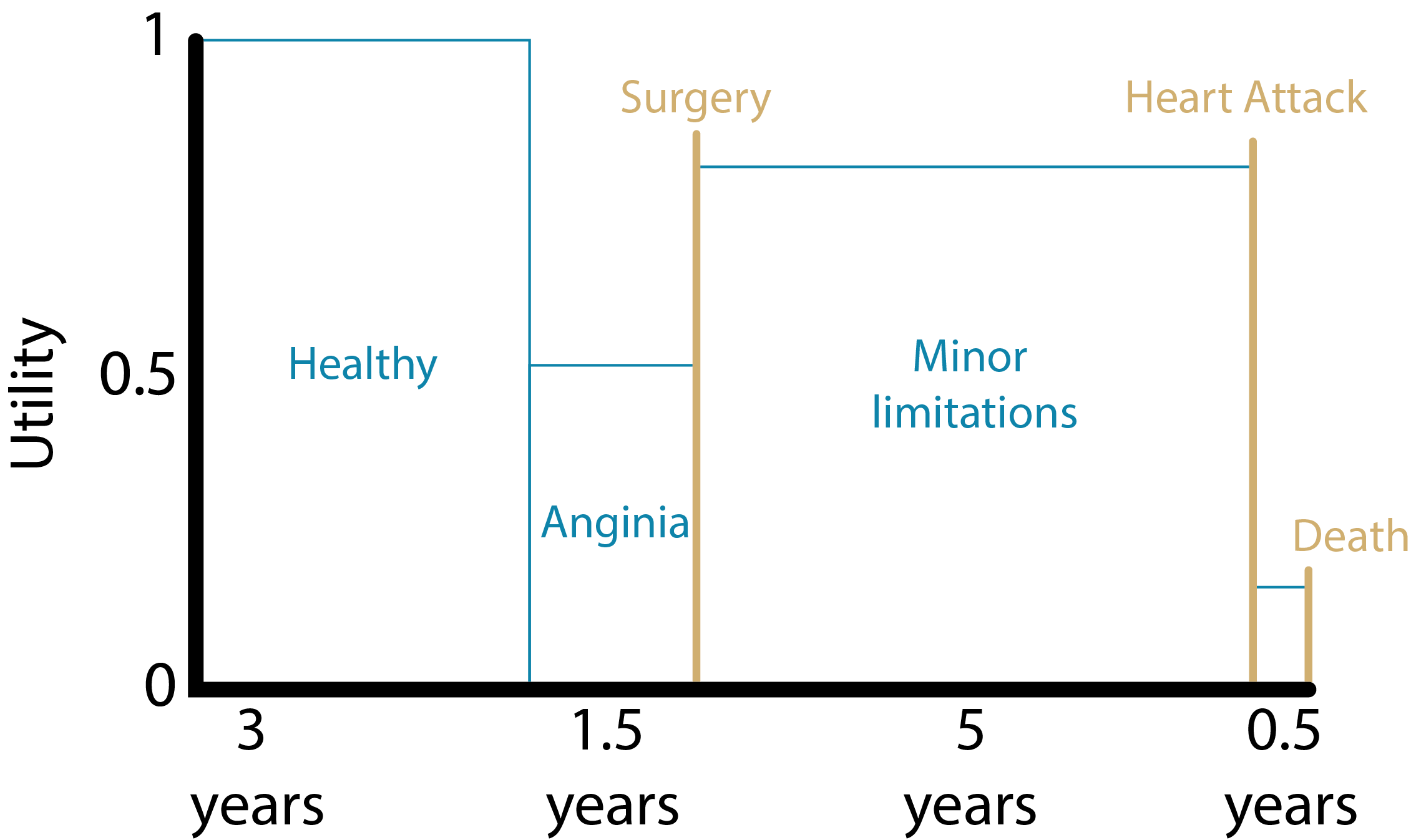
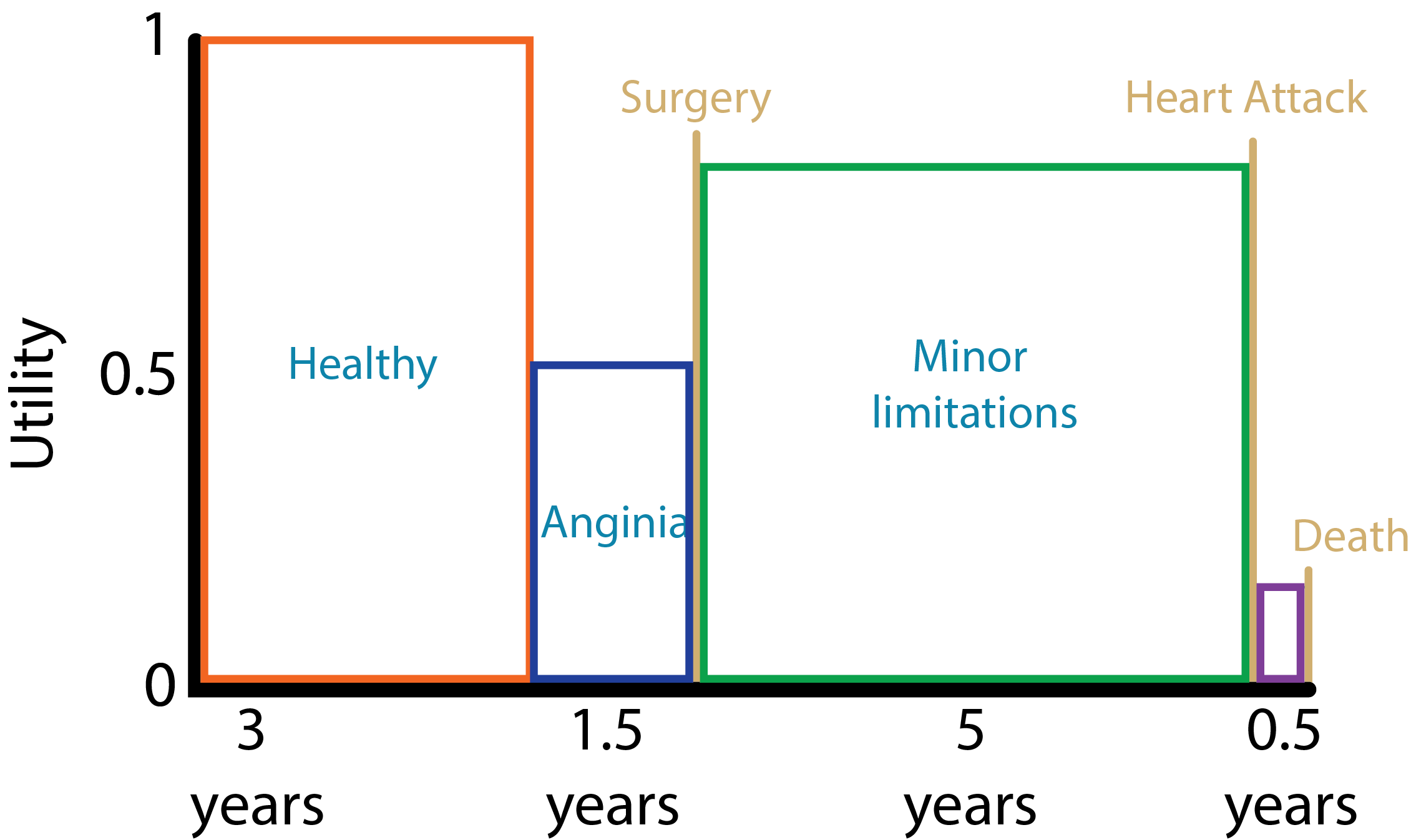
QALYS = (3yrs * 1.000) + (1.5yrs * 0.5) + (5yrs * 0.75) + (0.5yrs * 0.25)

= 7.625 QALYs

Source: Harvard Decision Science

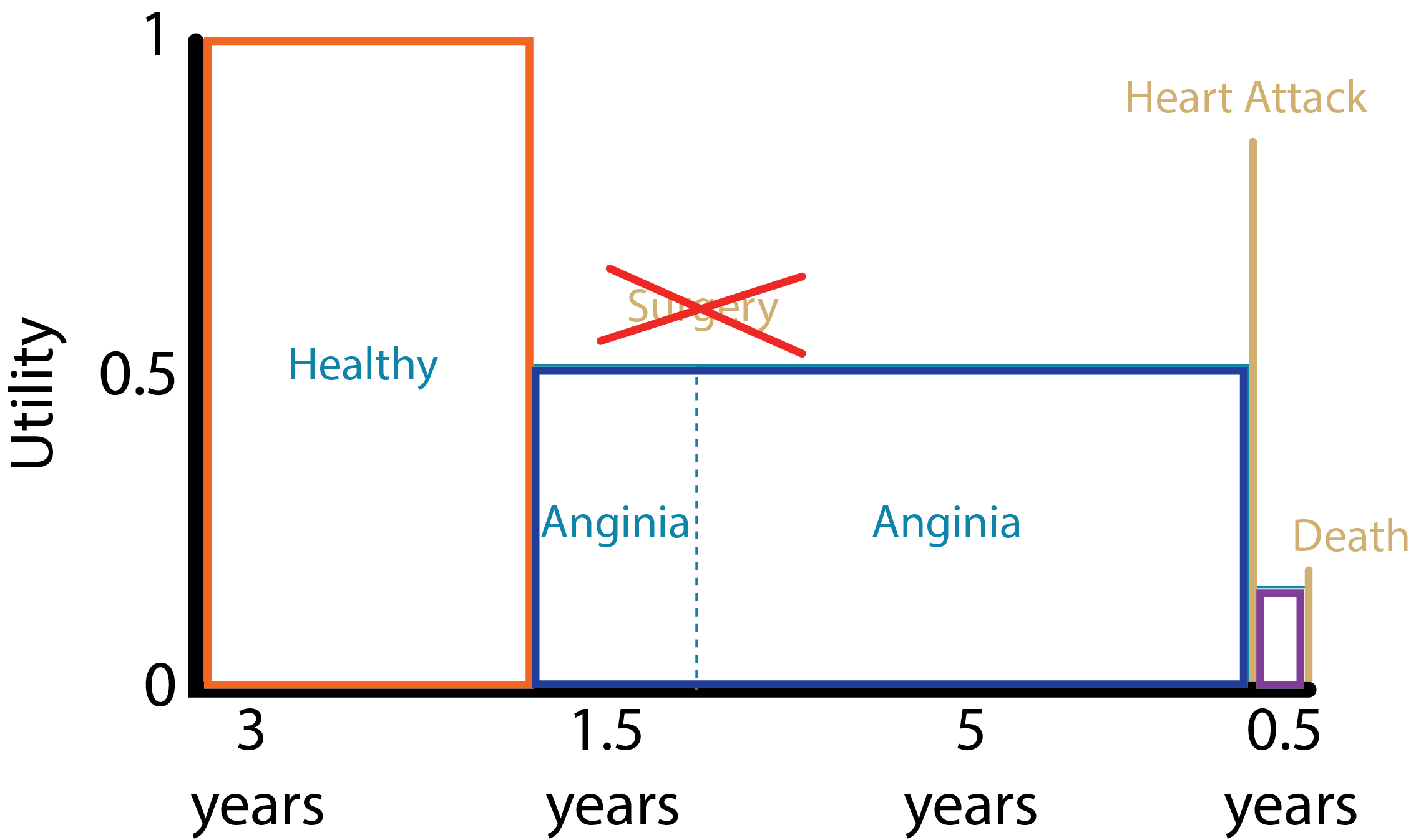
Example: Patient with coronary heart disease (without surgery)
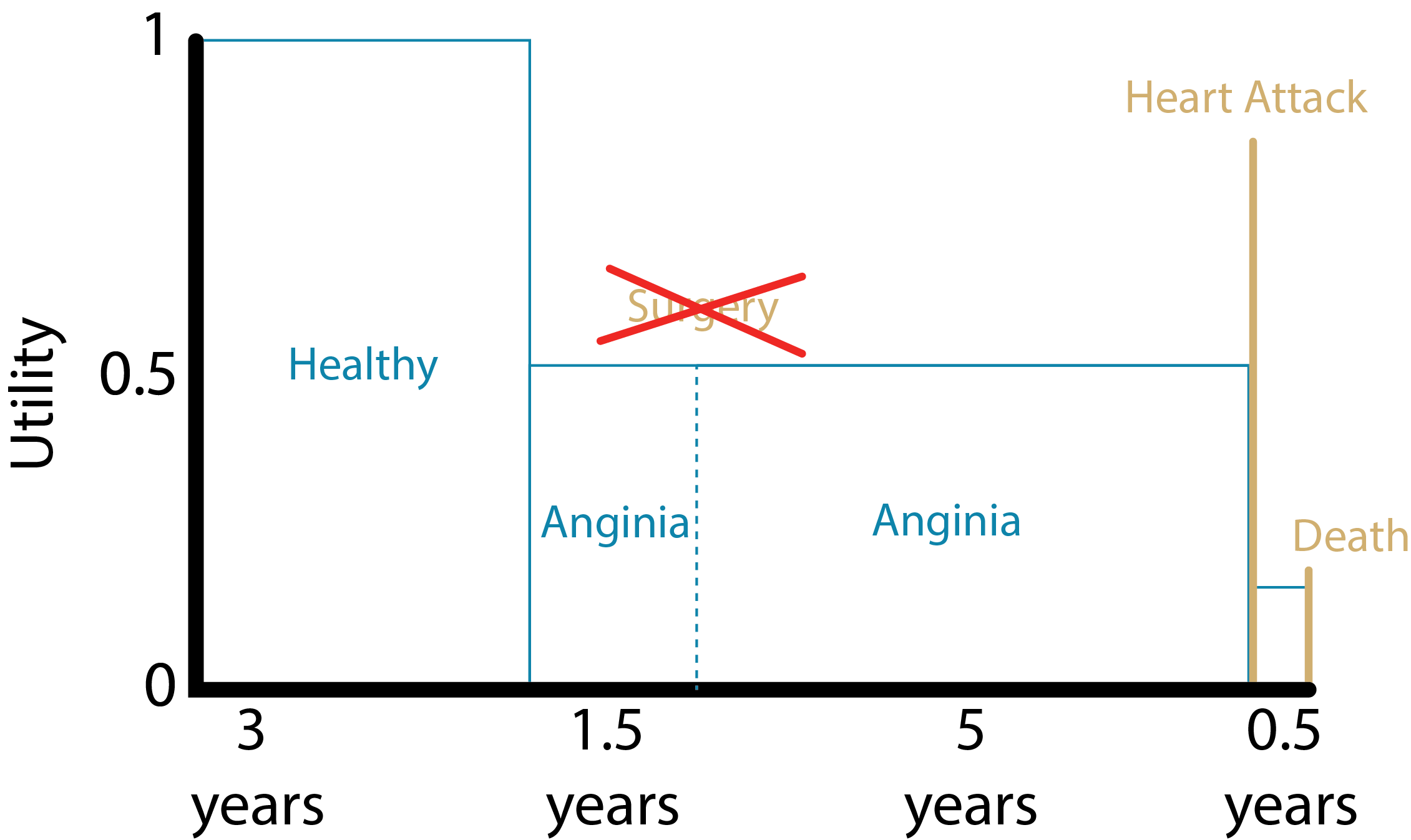
QALYS = (3yrs * 1.000) + (1.5yrs * 0.5) + (5yrs * 0.5) + (0.5yrs * 0.25)

= 6.375 QALYs

Source: Harvard Decision Science

Example: Patient with coronary heart disease

Life Years

  • With surgery: 10 LYs
  • Without surgery: 10 LYs
  • Benefit from surgery intervention:
    10LYs – 10LYs
    = 0 LYs

QALYs

  • With surgery: 7.625 QALYs
  • Without surgery: 6.375 QALYs
  • Benefit from surgery intervention:
    7.625 QALYs – 6.375 QALYs
    = 1.25 QALYs

Utility weights – How are they obtained?

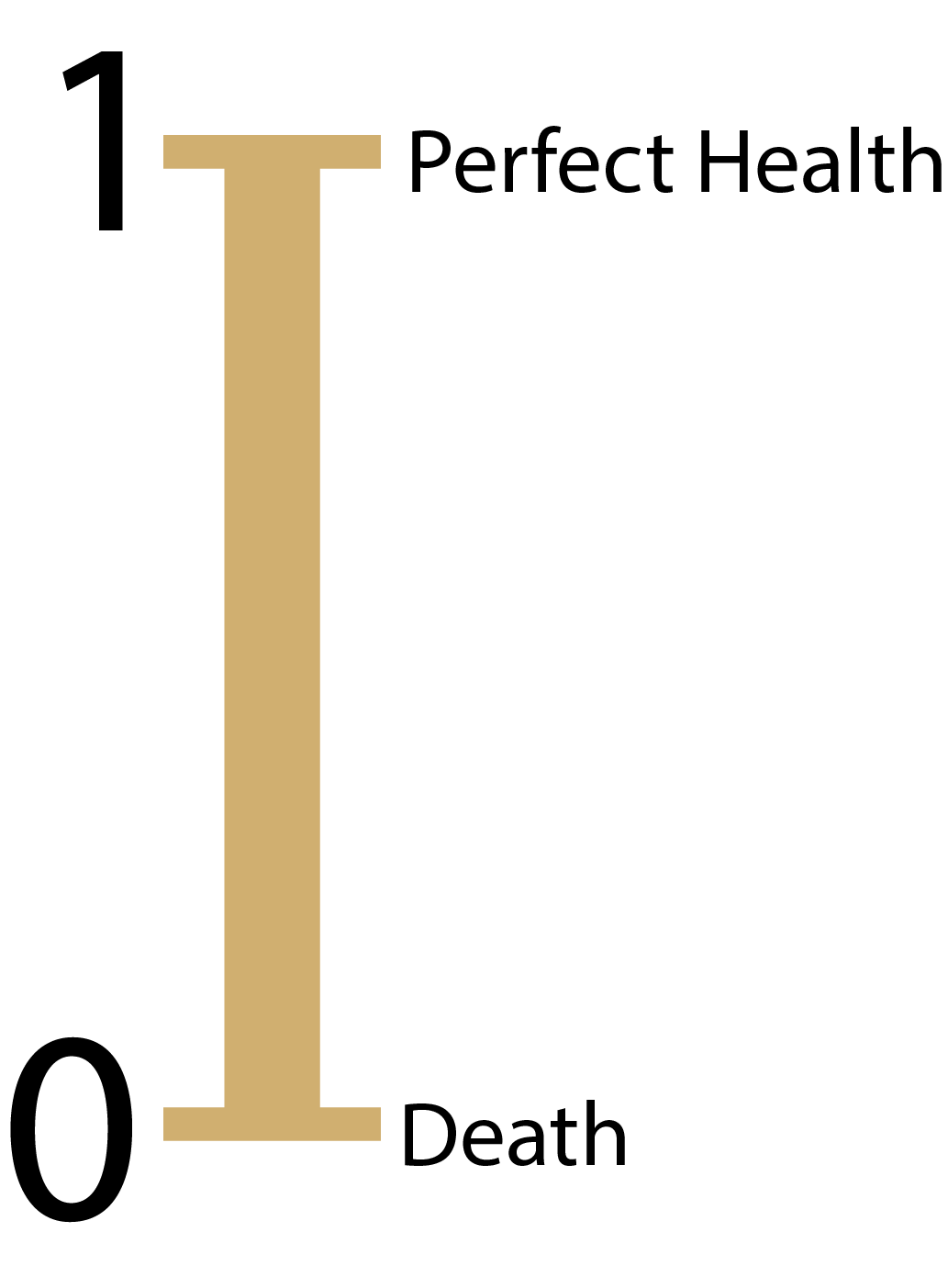
  • Utility weights for most health states are between 0 (death) and 1 (perfect health)

Direct methods:

  • Standard gamble
  • Time trade-Off
  • Rating scales

Indirect methods:

  • EQ-5D
  • Other utility instrument: SF-36; Health Utilities Index (HUI)

Direct methods - Standard Gamble (SG)

What risk of death would you accept in order to avoid [living with an amputated leg for the rest of your life] and live the rest of your life in perfect health?
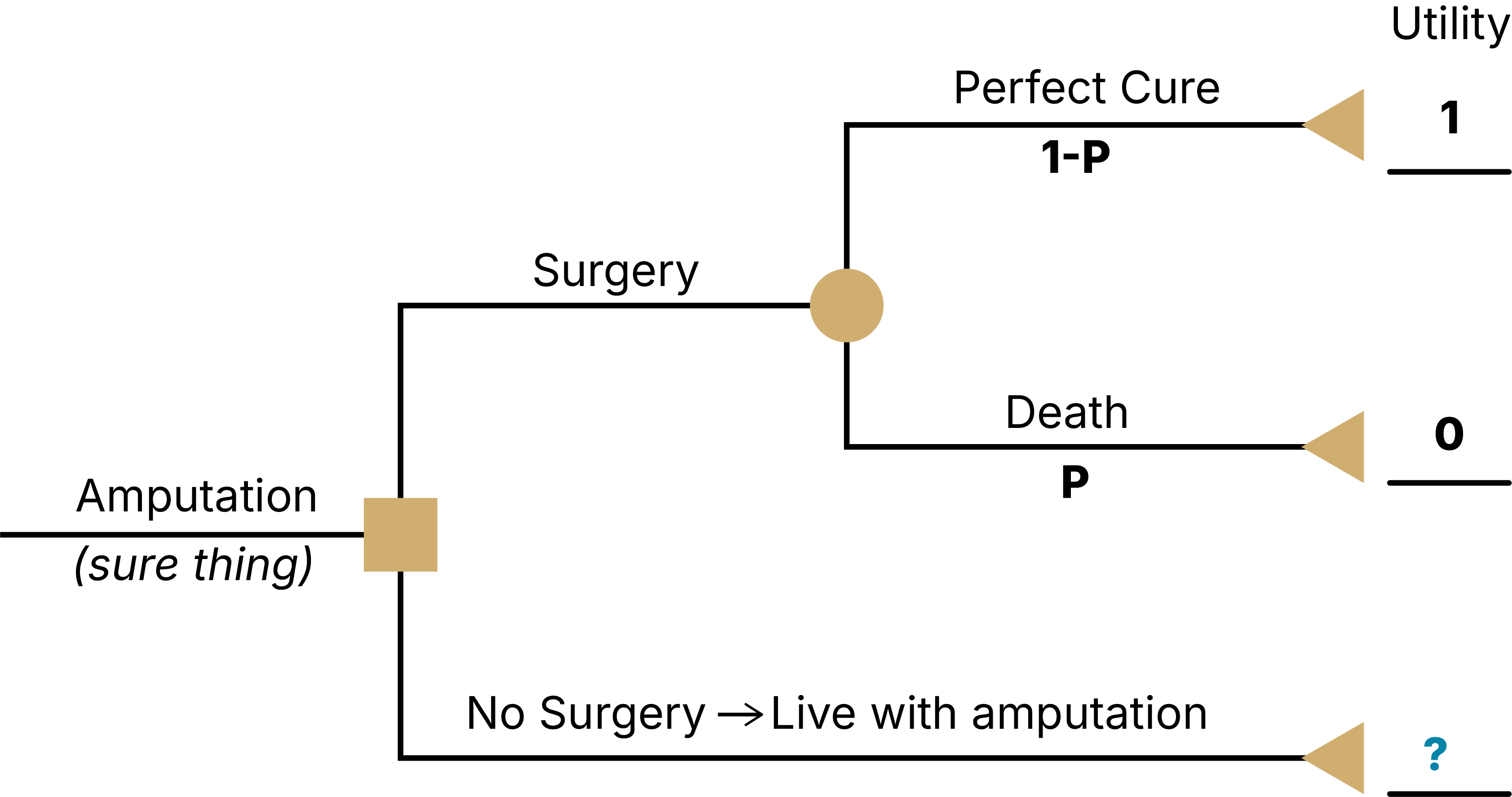
  • Find the threshold p that sets EV(A) = EV(B)
  • Assume respondent answered that they would be indifferent between A and B at a threshold of pDeath = 0.10
  • Then U(Amputation) = p*U(Death) + (1-p)*U(Perfect Health) = 0.10*0 + (1-0.10)*1 = 0.9 = threshold of indifference between surgery & no surgery (I will live with this rather than have a high risk of dying)

Direct methods - Standard Gamble (SG)

What risk of death would you accept in order to avoid [living with stroke for the rest of your life] and live the rest of your life in perfect health?
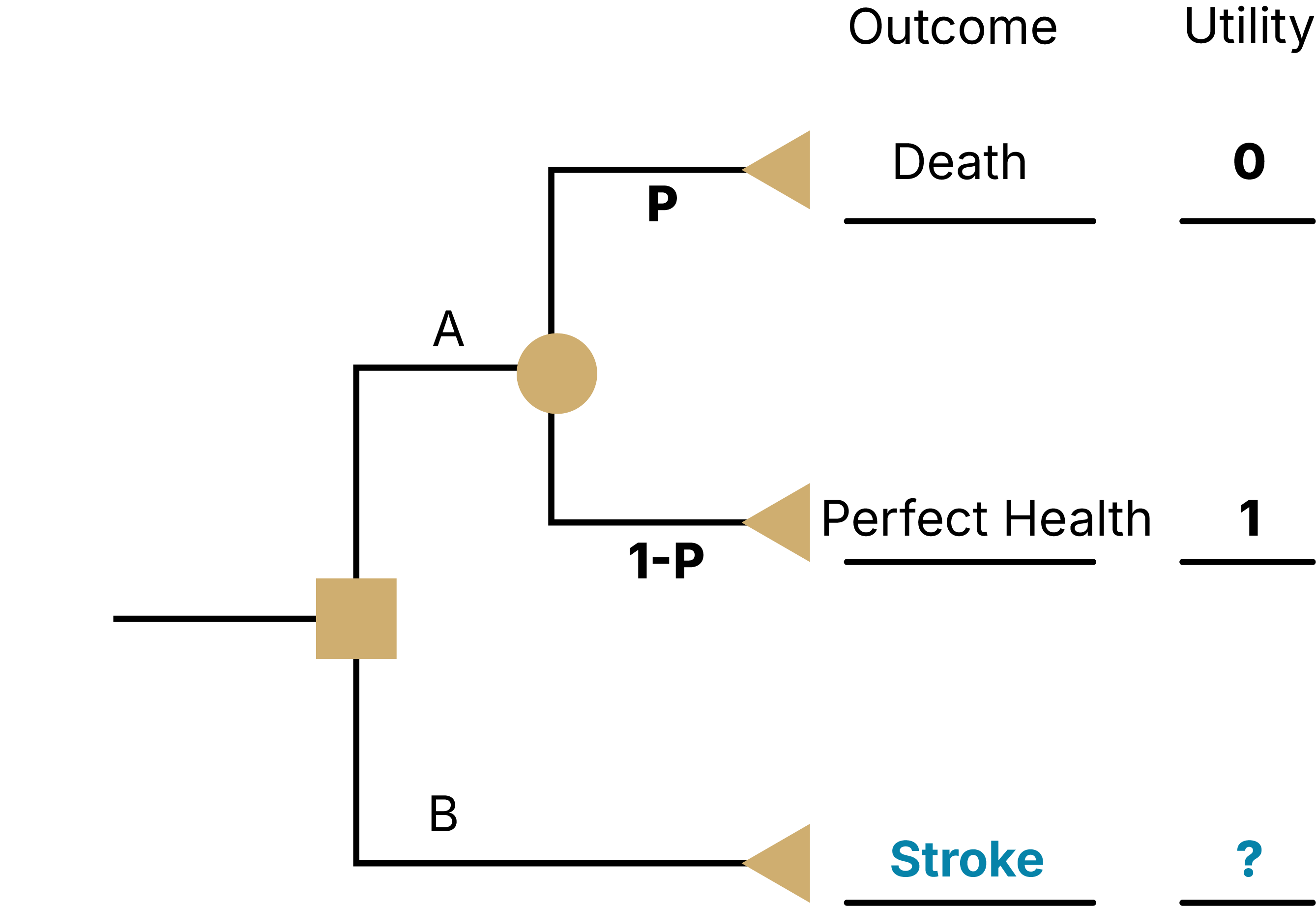
As a result of a stroke, you

  • Have impaired use of your left arm and leg

  • Need some help bathing and dressing

  • Need a cane or other device to walk

  • Experience mild pain a few days per week

  • Are able to work, with some modifications

  • Need assistance with shopping, household chores, errands

  • Feel anxious and depressed sometimes

Direct methods - Time Trade-Off (TTO)

  • An alternative to standard gamble

  • Instead of risk of death, TTO uses time alive to value health states

  • Does not involve uncertainty in choices

  • Task might be easier for some respondents compared to standard gamble

Direct methods - Time Trade-Off (TTO)

What portion of your current life expectancy of 40 years would you give up to improve your current health state stroke to ‘perfect health’?
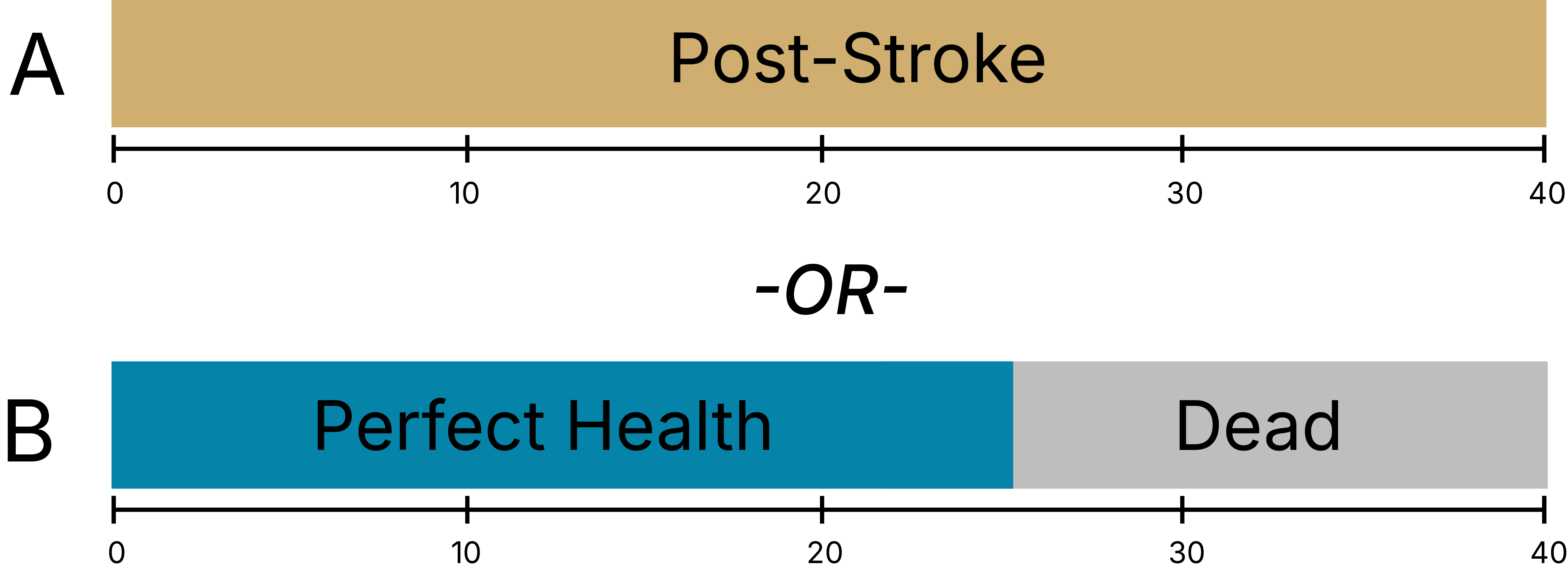
U(Post-Stroke) * 40 years = U(Perfect Health) * 25 years + U(Dead) * 15 years

U(Post-Stroke) * 40 years = 1 * 25 years + 0 * 15 years

U(Post-Stroke) = 25/40 = 0.625

SG vs TTO

Standard Gamble

  • Represents decision-making under uncertainty
  • Only valuing the health state
  • Risk posture is captured (risk aversion for death)
  • Utility values usually > TTO for same state

Time Trade-Off

  • Is decision-making under certainty
  • Might inadvertently capture time preference (i.e., we might value health in the future less than we do today)
  • Risk posture is NOT captured
  • Utility values usually < SG for same state

Rating scales

Example:

On a scale where 0 represents death and 100 represents perfect health, what number would you say best describes your health state over the past 2 weeks?“.

Problem:

It does not have the interval property we desire. For example, a value of “90” on this scale is not necessarily twice as good as a value of “45”

Visual Analogue Scale (VAS)

The Visual Analog Scale (VAS) is a commonly-used rating scale
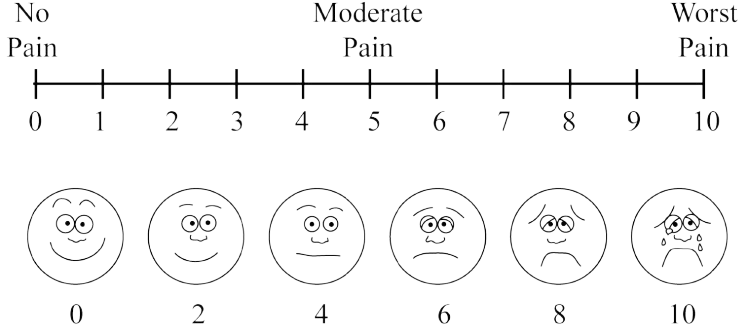
Source: https://assessment-module.yale.edu/im-palliative/visual-analogue-scale

Direct methods – Rating scales

  • Easy to use: Rating scales often used where time or cognitive ability/literacy prevents use of other methods
  • Very subjective and prone to more extreme answers! Usually, utilities for VAS < TTO < SG

Indirect methods - EQ-5D

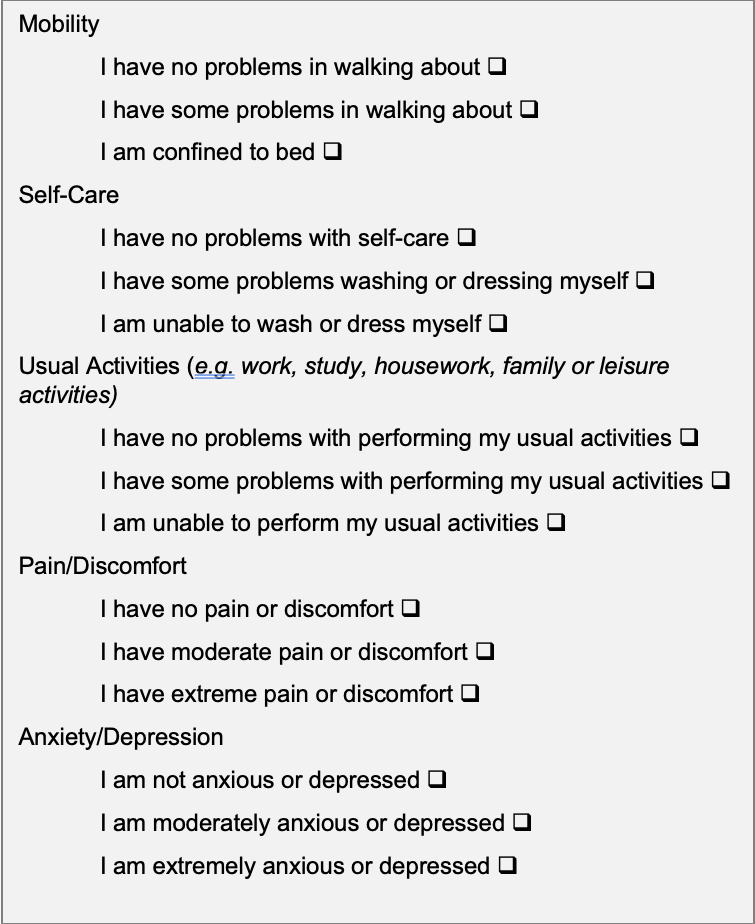
  • System for describing health states

  • 5 domains: mobility; self-care; usual activities; pain/discomfort; and anxiety/depression

  • 3 levels: 243 distinct health states (e.g. 11223)

  • Valuations elicited through population based surveys with VAS, TTO
Indirect methods

HUI
Health Utility Index

EQ5D
EuroQol health status measure

SF-6D
Converts SF-36 & SF-12 scores to utilities

QWB
Quality of well-being scale

Alternatives to ICERs

03

Alternatives to ICERs

ICERs are the most common approach for describing CEA results

Advantages

  • Summarizes all aspects of decision problem except WTP (which comes from decision-maker)

Disadvantages

  • Ratios can act poorly/are unstable; especially when there is a lot of uncertainty in the denominator, the incremental QALYs are small, or close to zero.
  • For cost-saving interventions, the ICER is meaningless.

An Alternative

Maybe all of your interventions are cost-effective under accepted WTPs & your goal, rather, is to quantify the short and long-term health benefits of interventions.

If willing to choose a fixed willingness-to-pay threshold (e.g., λ= 100,000 / QALY), can write down an equation for the contribution of health and cost to utility.

Net Health Benefit (NHB)

Net Monetary Benefit (NMB)

Objective: Select the strategy with the highest NHB/NMB

Net Health Benefit (NHB)

NHB_s = E_s - \frac{C_s}{λ} E_s is effectiveness of strategy s

C_s is cost of s

λ is WTP threshold

  • Effectiveness is already in QALYs, no conversion needed
  • Cost is in $, needs conversion to QALYs (so need to divide by $/QALY)

Net Monetary Benefit (NMB)

NMB_s = E_s * λ - C_s

where

E_s is effectiveness of strategy s

C_s is cost of s

λ is WTP threshold

  • Cost is already in $, no conversion needed

  • Effectiveness is in QALYs, needs conversion to $ (multiply by $/QALY)

Example: NHB

E_1 = 0.07 years

E_2 = 0.10 years

C_1 = 1,500

C_2 = 2,800

λ = 50,000 per year of life saved

ICER = \frac{2800 - 1500}{0.10 - 0.07}

=43,333

Example: NHB

NHB_1 = 0.07−\frac{1500}{50000} =0.040

NHB_2 = 0.10−\frac{2800}{50000} =0.044

IncNHB = 0.044−0.040=0.004

  • Suggests a small difference in QALYs between the interventions (.004*365 = 1.46 days)
  • The cost adjusted NHB accounts for the tradeoffs between health outcomes and costs into a single measure.

Example: Net Monetary Benefit (NMB)

NMB_1=(0.07×50000)−1500 = 2000

NMB_2=(0.10×50000)−2800=2200

IncNMB =2200−2000=200

  • Quantifies this improvement’s value in monetary terms.
  • Treatment 2 provides $200 more net value than Treatment 1 after accounting for both its additional health benefit and higher cost.

NHB/NMB

The strategy with the highest incremental NHB or NMB is the preferred option, given a specified WTP threshold.

A higher NHB means more health gained after accounting for costs.

Key Takeaways

Benefits

  • Clinical outcomes should be clearly defined and relevant to the decision question.
  • QALYs combine quantity and quality of life into a single summary measure, enabling comparisons.
  • Net benefit approaches provide alternatives to ICERs but require an explicit willingness‑to‑pay threshold.

Questions?

Next Lecture: DALYs