One-way sensitivity analysis
Deterministic, Threshold and Scenario Analyses
Learning Objectives and Outline
Learning Objectives
Explain the purpose of deterministic sensitivity analysis and provide examples of one-way versus two-way analyses.
Detail the advantages/disadvantages of deterministic sensitivity analysis.
Outline
01
02
Two-way sensitivity analysis
03
Limitations and extensions
04
Scenario analysis
05
Threshold analysis
06
Summing up analyses beyond the base case
Sensitivity Analyses
- ICER for Prevention strategy is just above WTP threshold of $50,000/QALY.
- When evaluated using net monetary benefit at a $50,000/QALY threshold, treatment has a slightly higher NMB than prevention, indicating that the two strategies deliver nearly equivalent value for money.
- How sensitive are these results to changes in specific model inputs?
One-way sensitivity analysis
01
One-way sensitivity analysis
- Usually the starting point for sensitivity analyses
- Sequentially testing one variable at a time (i.e., Age, BMI, QALY, other clinically important parameters), while holding everything else constant
- Determining how this variation impacts the results
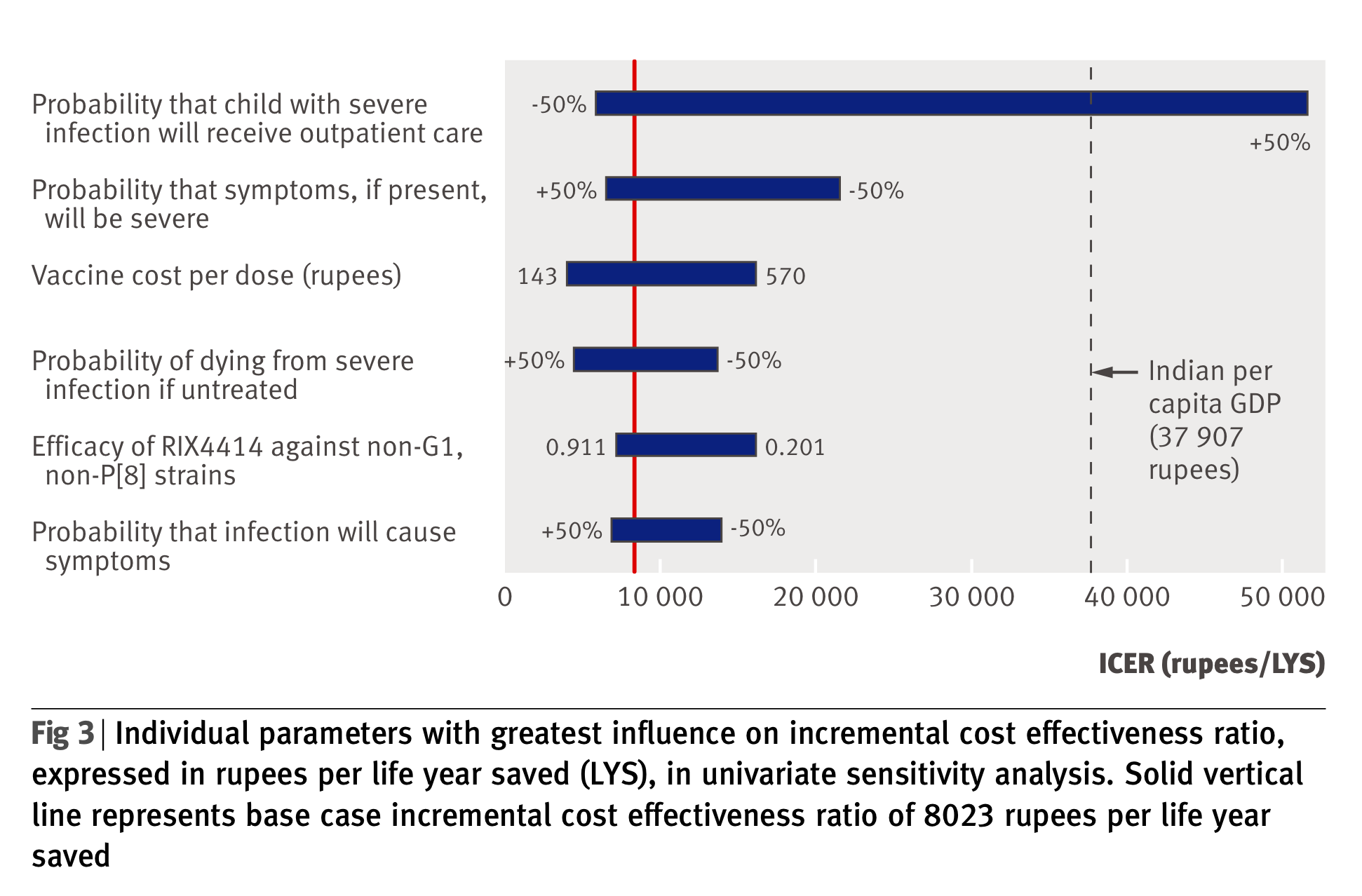
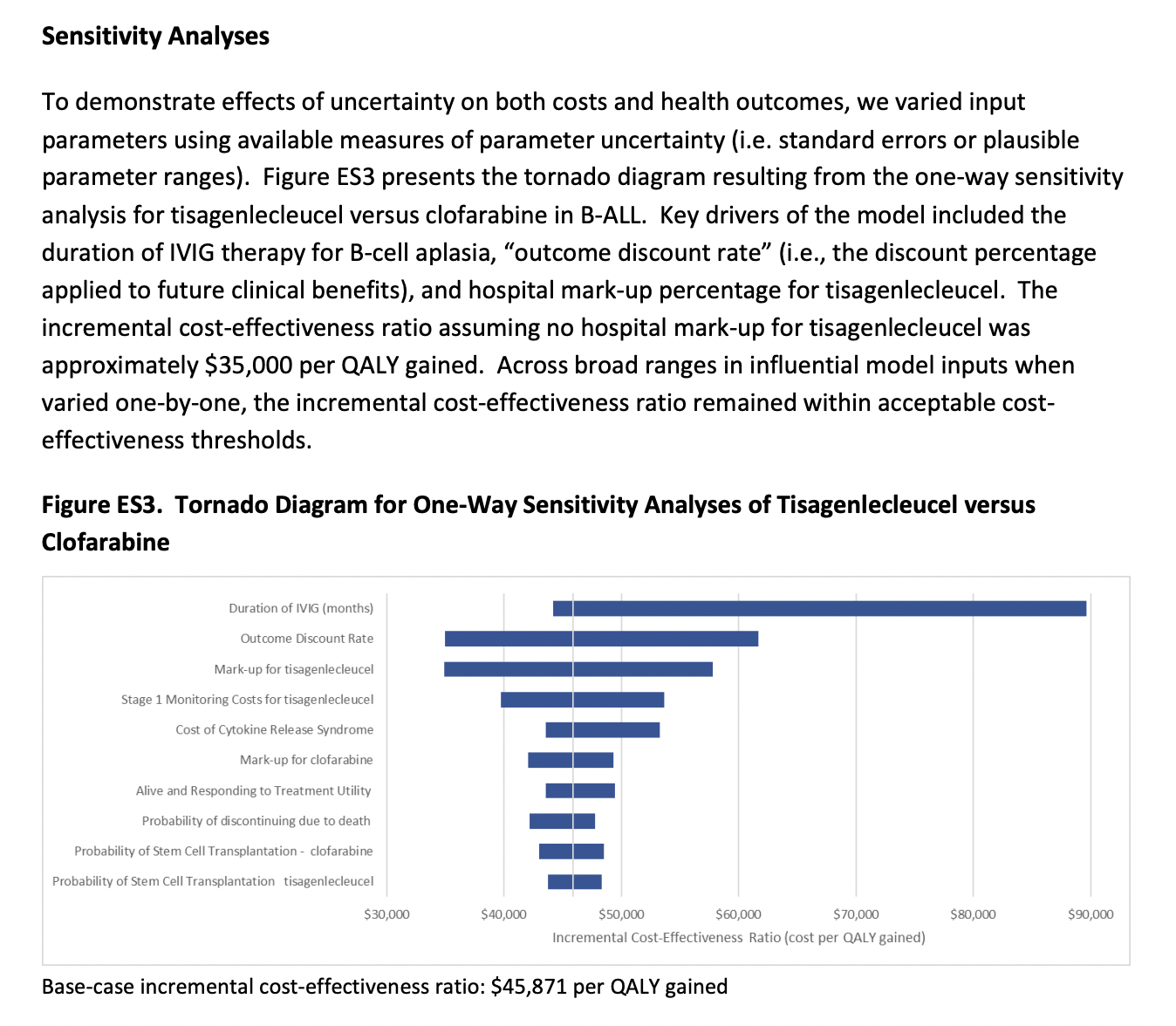
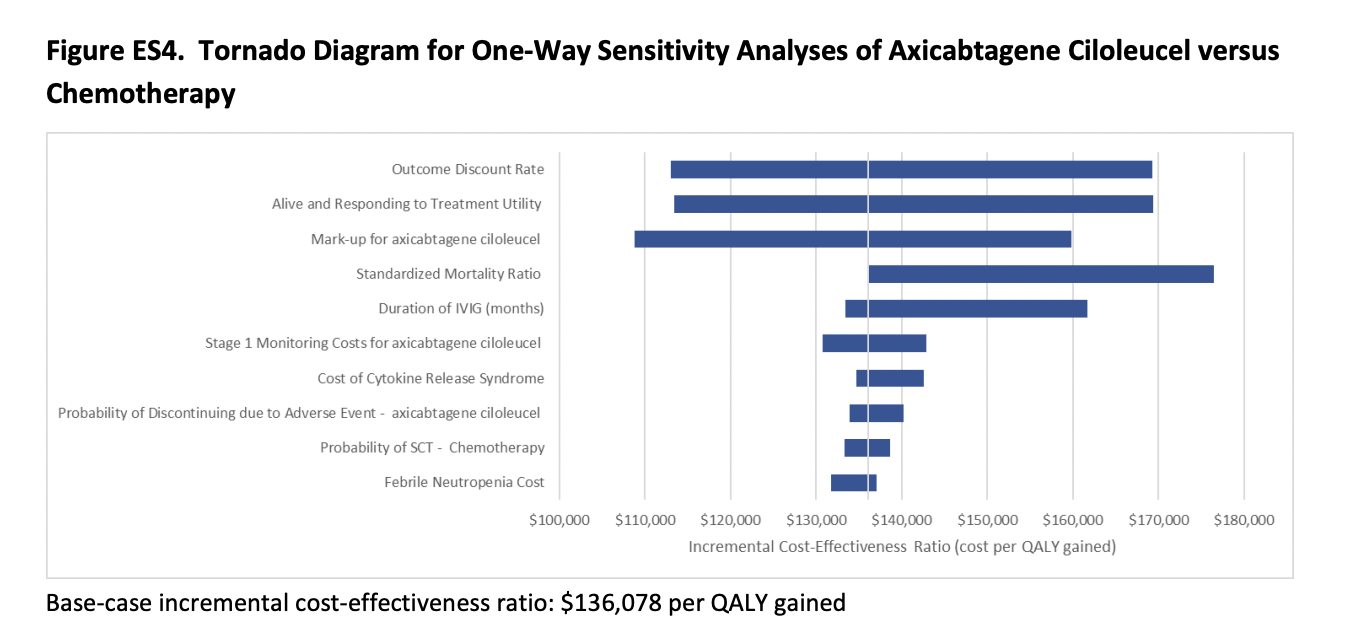
- One-way sensitivity analyses are often presented in a tornado diagram
- Used to visually rank the different variables in order of their overall influence on the magnitude of the model outputs
Examples from publications
Rotavirus study
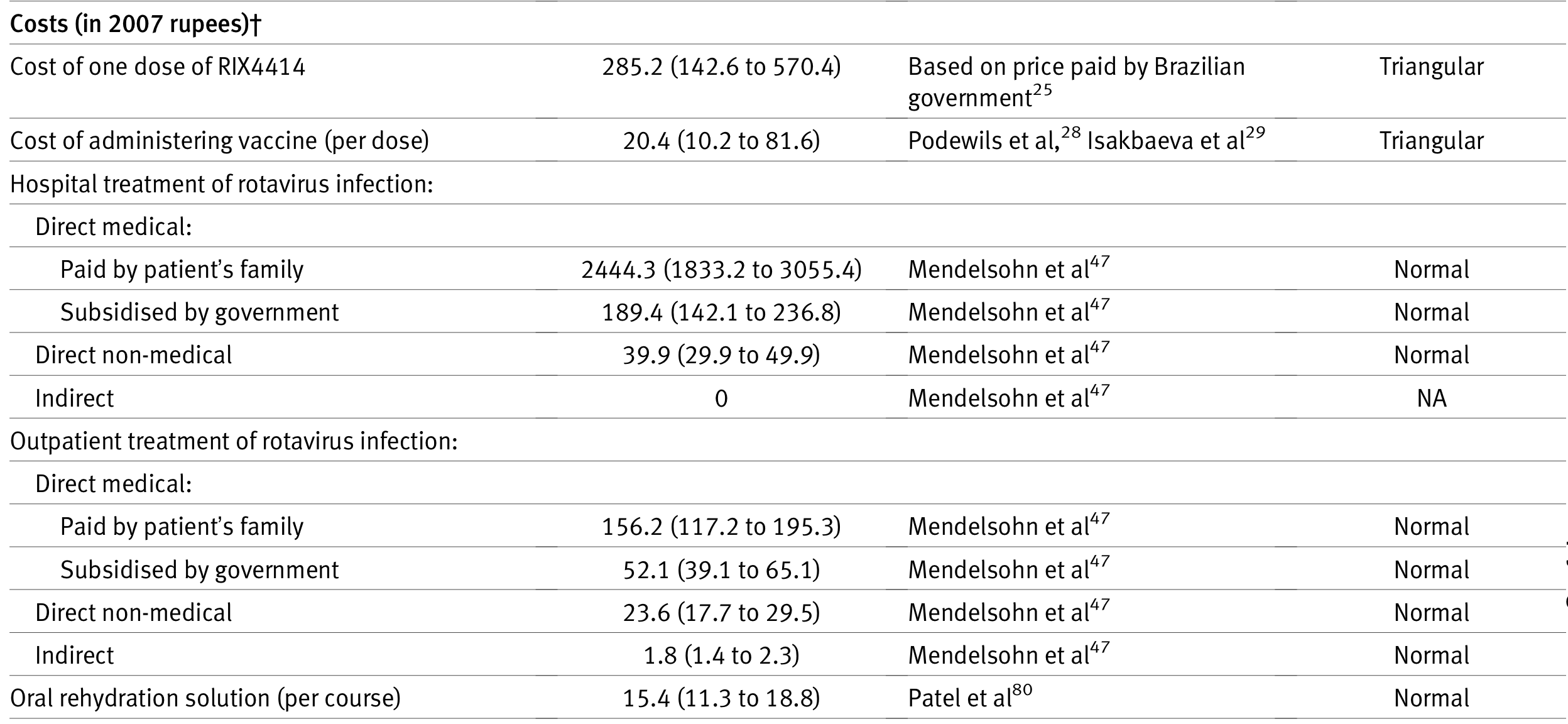
Rotavirus study
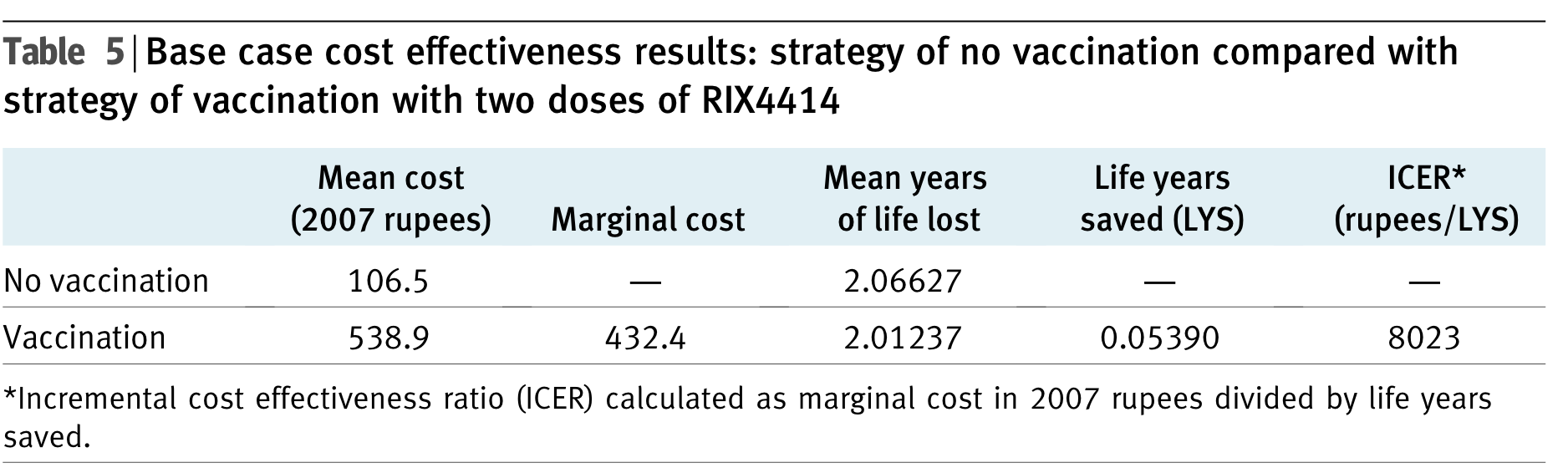
Rotavirus study
Other examples
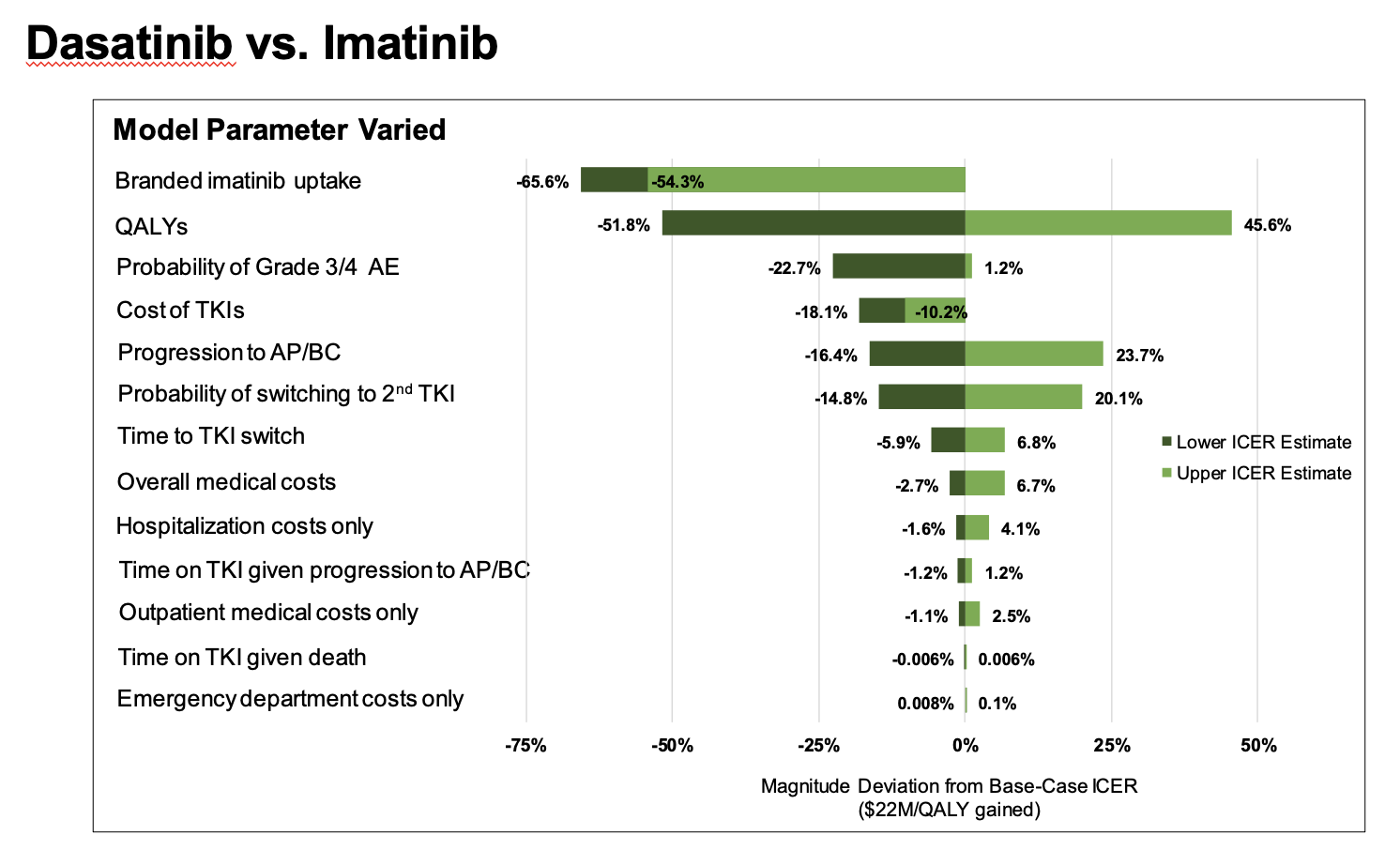
Other examples
Other examples
Other examples
A hypothetical problem
Primary Results: Progressive Disease
| Strategy | ICER |
|---|---|
| Status Quo | - |
| Treatment | 49,513 |
| Prevention | 139,630 |
Treatment is cost-effective at WTP=$50,000/QALY—but barely.
How sensitive is this result to the input parameter values used?
Two-way sensitivity analysis
02
Two-way sensitivity analysis
- A way to map the interaction effects between two parameters in a decision analysis model
- Varies 2 parameters at a time
- Explores the robustness of results in more depth
Examples from publications
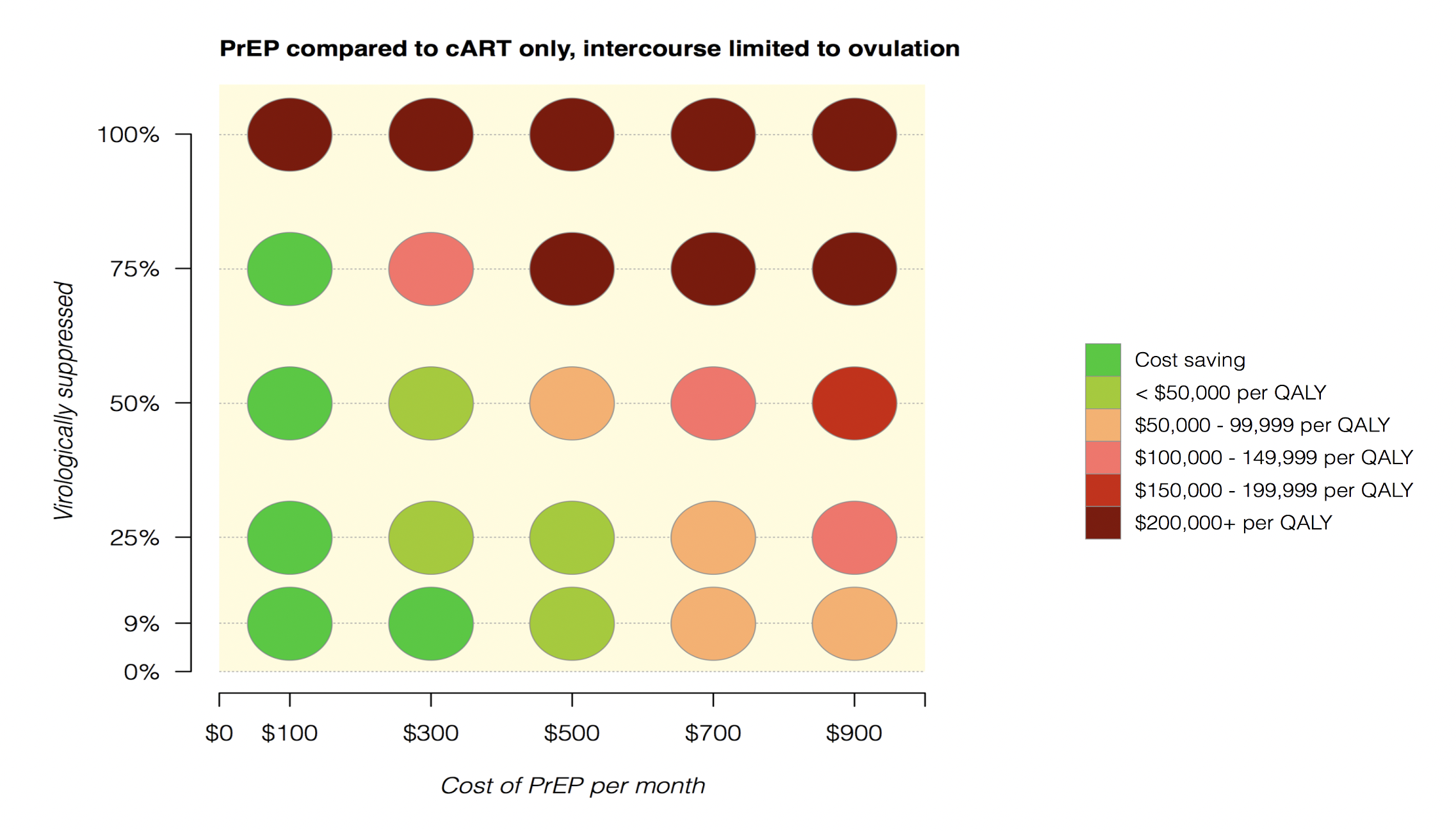
HIV prevention
HIV prevention
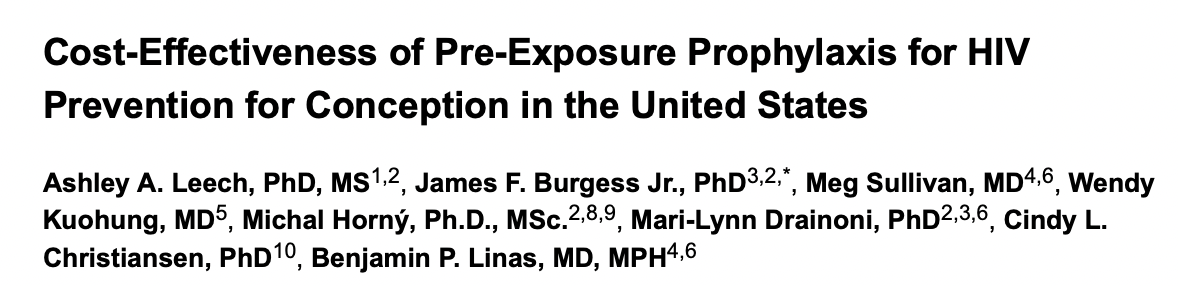
Markov model examining strategies for HIV prevention among serodiscordant couples seeking conception (woman does not have HIV and male has HIV)
We know that if the male partner is consistently on medication for HIV (i.e., resulting in virologic suppression), then the risk of transmission is small regardless of the woman taking PrEP (pre-exposure prophylaxis)
And we also know that PrEP has traditionally been really costly
HIV prevention
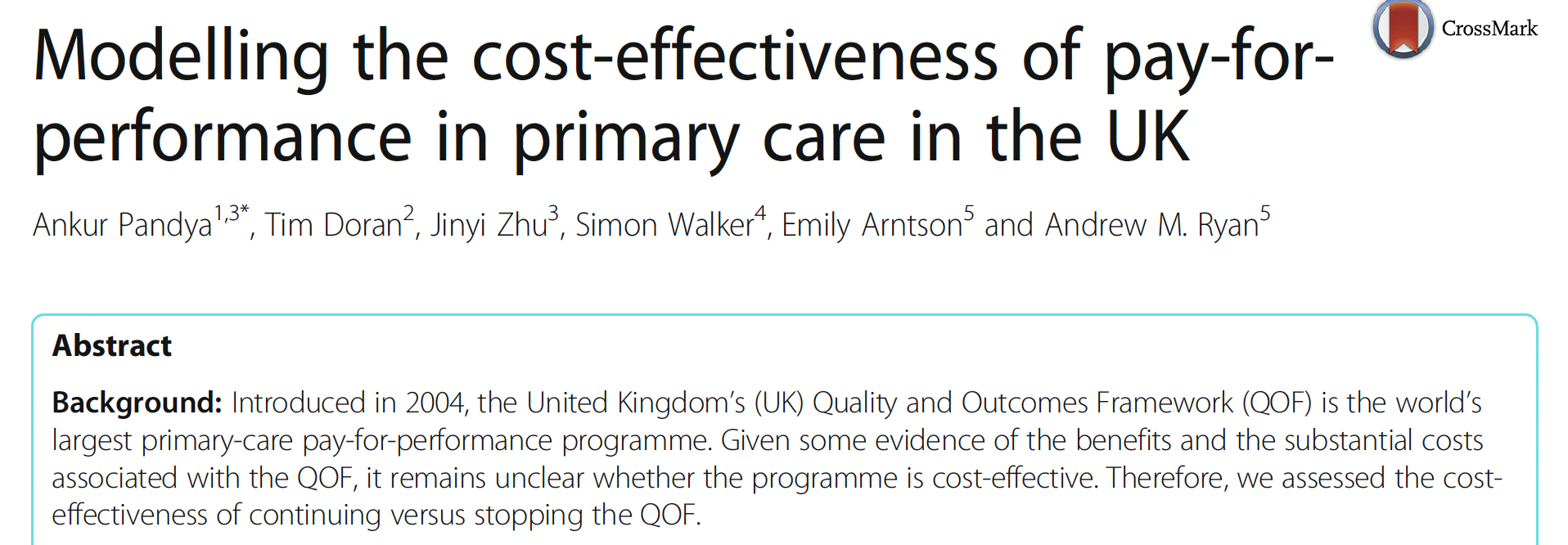
Financial incentives for acute stroke care
Financial incentives for acute stroke care
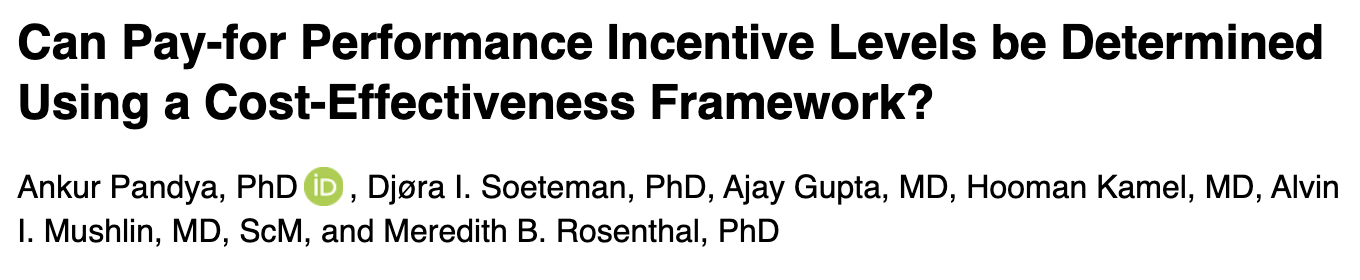
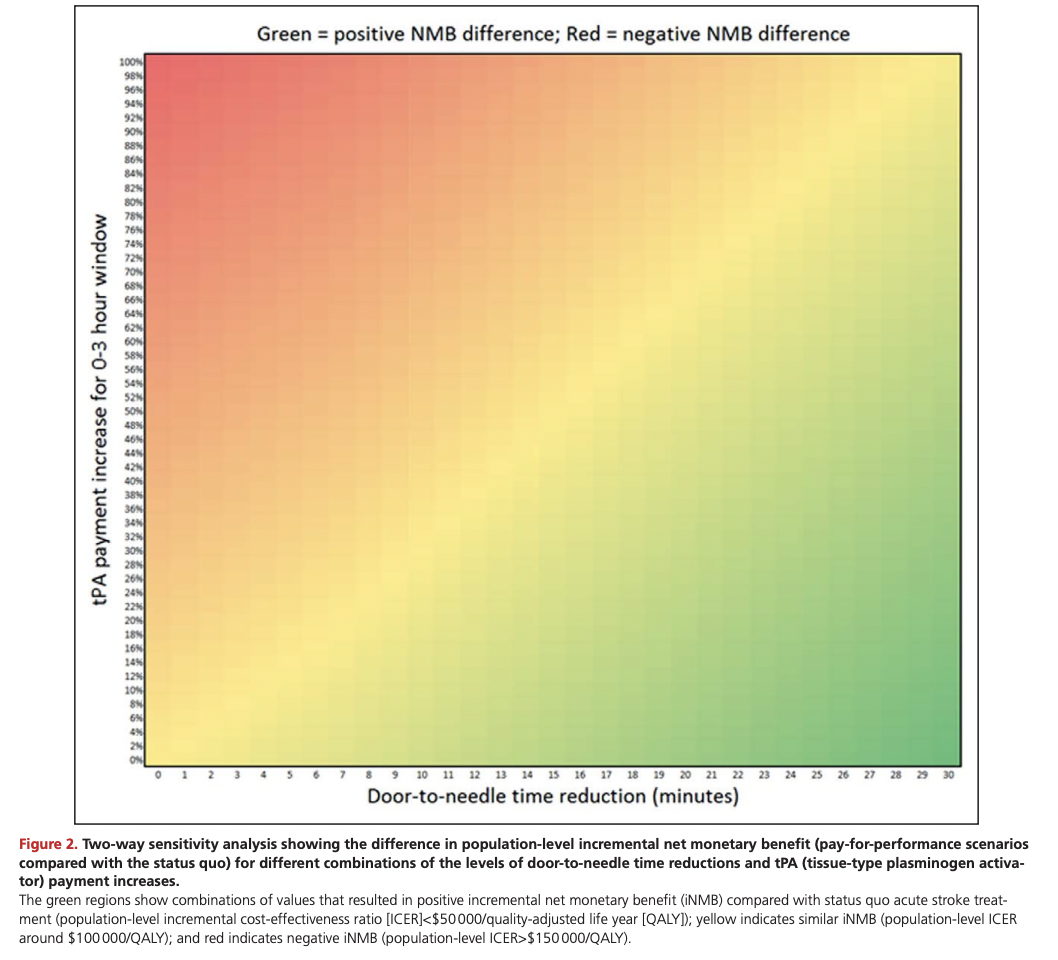
Under pay for performance policies in the US, physicians or hospitals are paid more for meeting evidence-based quality targets
Study objective: Illustrate how pay-for-performance incentives can be quantitatively bounded using cost-effectiveness modeling, through the application of reimbursement to hospitals for faster time-to-tPA for acute ischemic stroke
Financial incentives for acute stroke care
When administered quickly after stroke onset (within three hours, as approved by the FDA), tPA helps to restore blood flow to brain regions affected by a stroke, thereby limiting the risk of damage and functional impairment
Financial incentives for acute stroke care
Limitations & extensions
03
Limitations of deterministic sensitivity analyses
Caution: Limitations!
- Limited by the subjectivity of the choice of parameters to analyze
- That’s why we also run PSAs!, i.e., varying ALL input parameters at the same time, using priors to play a distribution around each value
- PSA lecture will be available asynchronously
Scenario analysis
04
Motivation
- Rather than adding new strategies, we can model interventions under alternative assumptions—e.g., medication initiated pre-pregnancy versus during pregnancy, which has different startup risks and costs (hospital-based initiation vs no required stay if already stable).
Scenario analysis
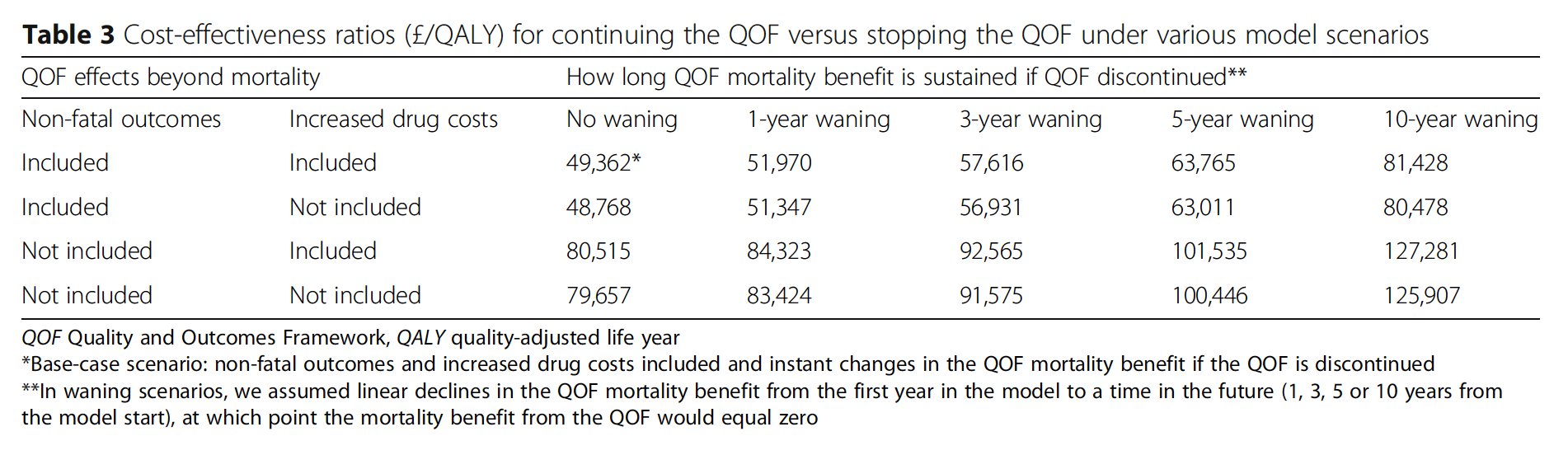
- Examines uncertainty in model assumptions or structure, often resulting in different parameter values across scenarios (while interventions/strategies remain the same)
- Uses hypothetical or alternative scenarios (e.g., optimistic vs conservative assumptions about long-term survival).
- Can include separate analyses by:
- Subgroups or sub-populations (e.g., age cohorts, risk levels)
- Perspective (societal vs healthcare sector)
- Time horizon
Examples
Examples
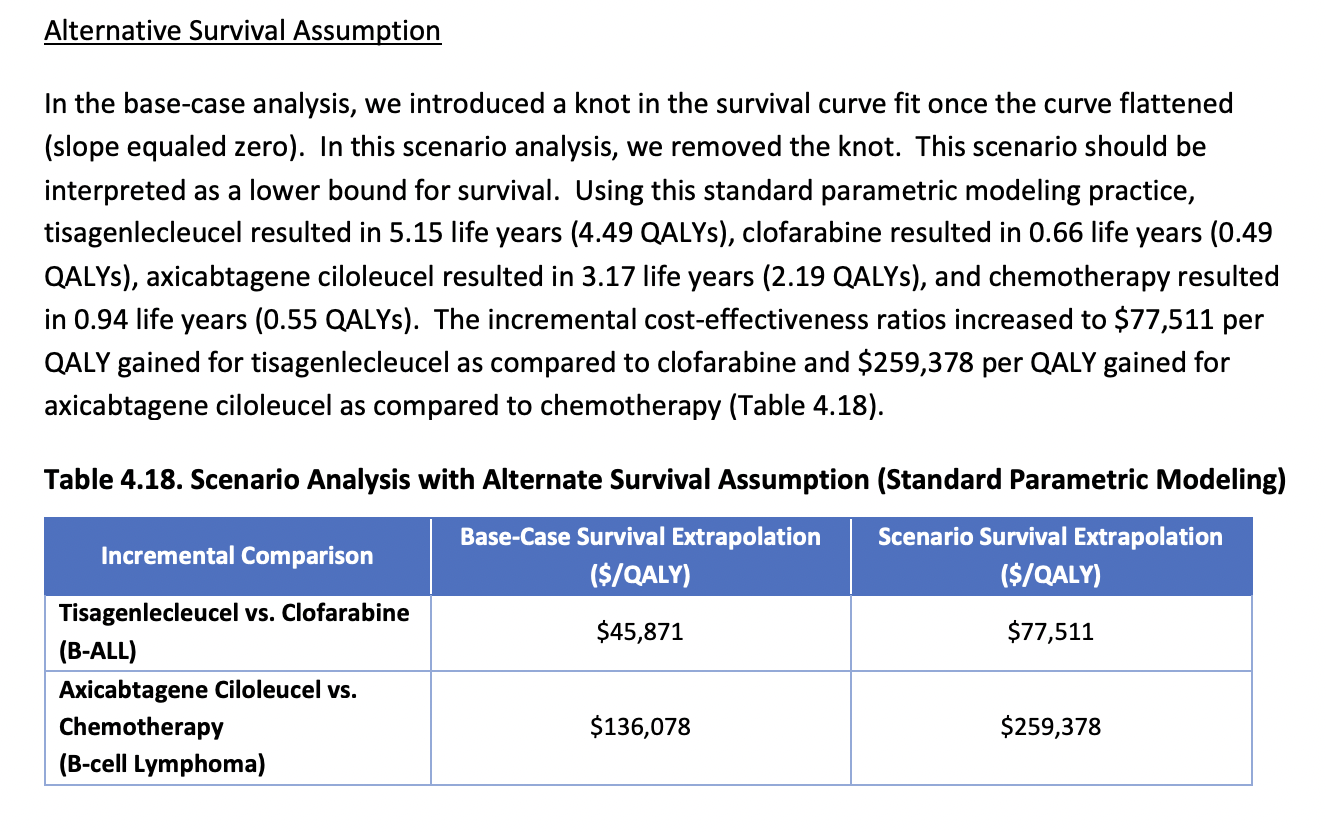
Examples
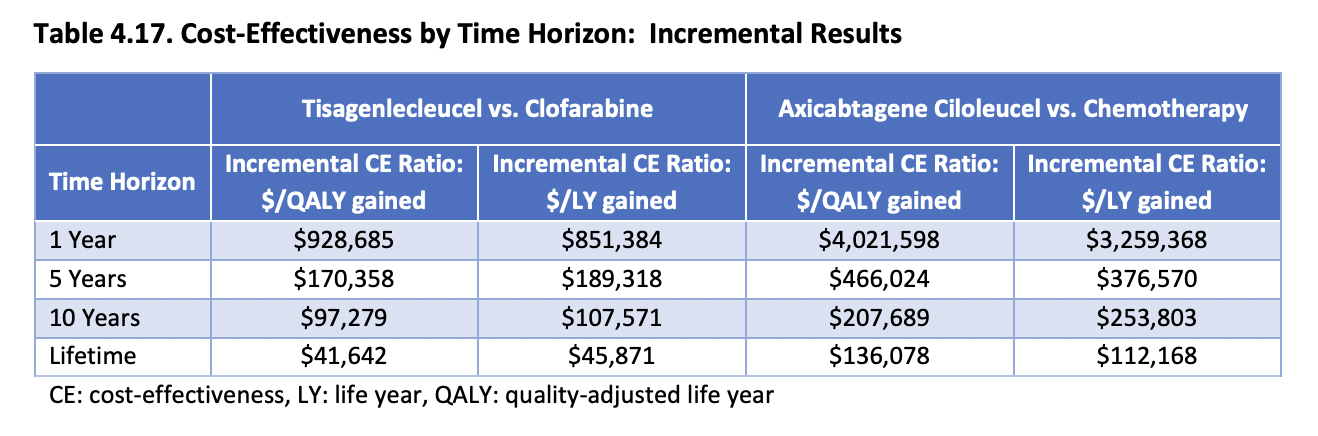
Examples
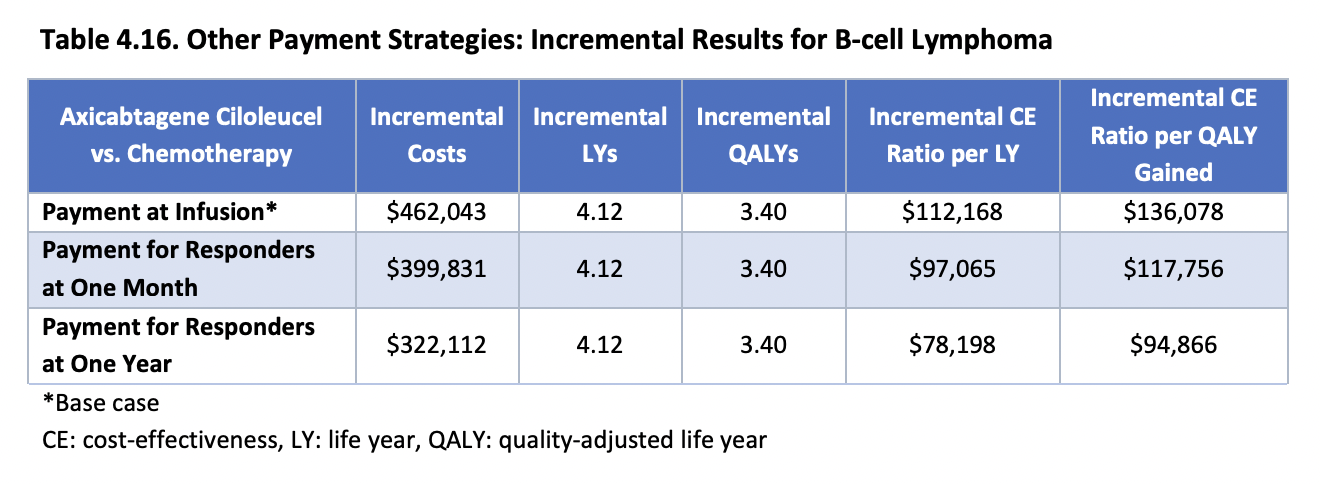
Examples
Examples
Scenario analysis
05
Threshold analysis
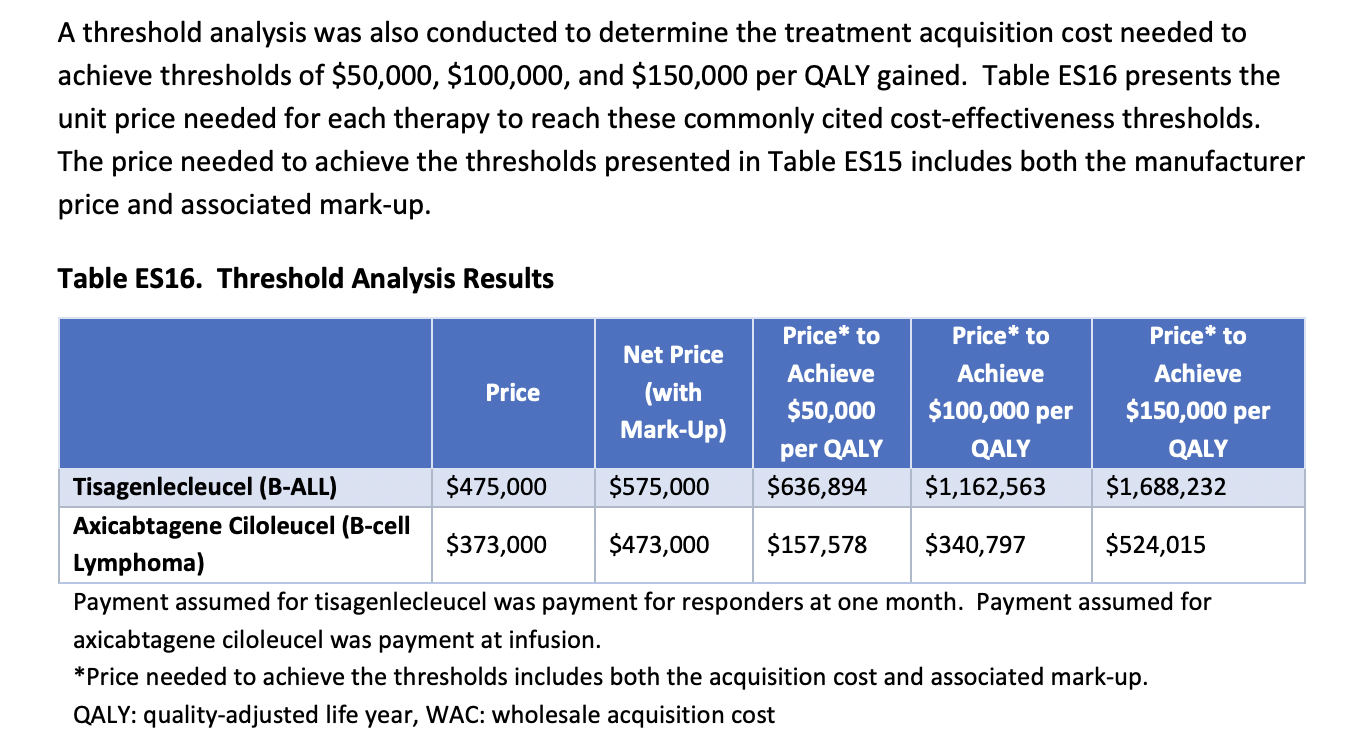
- Answers the question: What does the input parameter need to be to meet the country thresholds of:
- $50,000/QALY gained
- $100,000/QALY gained
- $150,000/QALY gained
- $200,000/QALY gained
Examples
Examples
Summing up analyses beyond the base case
06
Analyses Beyond the Base Case
| Analysis type | What varies | What question it answers | What it does not tell you |
|---|---|---|---|
| One-way sensitivity analysis | One parameter at a time | Which inputs most influence results? | Joint uncertainty |
| Two-way sensitivity analysis | Two parameters jointly | How do two key inputs interact? | Full parameter uncertainty |
| Threshold analysis | A single parameter | At what value does the preferred strategy change? | How plausible that value is |
| Scenario analysis | Model assumptions or structure (with re-specified parameters) | How do results change under alternative plausible scenarios? | Key inputs may be unavailable, leading to partial or simplified scenario assumptions |
| Probabilistic sensitivity analysis (PSA) | All uncertain parameters simultaneously | What is the probability each strategy is cost-effective at a given WTP? | Does not address uncertainty in model structure or assumptions |
Probabilistic Sensitivity Analysis (PSAs)
PSAs: Asynchronous lecture
- Goes beyond other sensitivity analyses; instead of testing changes 1 at a time, PSA:
- Reflects how uncertain we actually are about each input simultaneously
- Combines that uncertainty across the entire model
- Estimates the proportion of simulations in which each strategy is cost-effective at a given WTP (e.g., out of 10,000 iterations)